The Why Now Community Challenge: Veeam Data Platform 13.1. It’s time to vote!
News, guidelines and various community projects
Recently active
Hello Veeam Community and R&D team,As a Data Recovery engineer, I regularly encounter cases of VBK/VIB/VRB archive corruption due to storage failures or ransomware attacks.When dealing with partially encrypted files or read errors, native Veeam tools often simply throw an error and abort, without attempting to extract any surviving data. To address this, I began reverse-engineering the binary structure of Veeam files and am developing custom software for their recovery.During this process, I identified the following key structural groups:Header SnapShotSlot 0 and SnapShotSlot 1 (SSS0, SSS1) Metabanks + DataBlocksThe Header contains basic info and is easy to recover. The SnapShotSlot contains critical data required to begin parsing Metabanks. This block can also be reconstructed, but only after successfully analyzing the Metabanks themselves. Next comes the Metabank table (CRC32, file offset, size). Its loss is fatal, as without it, a parser has no knowledge of the physical location
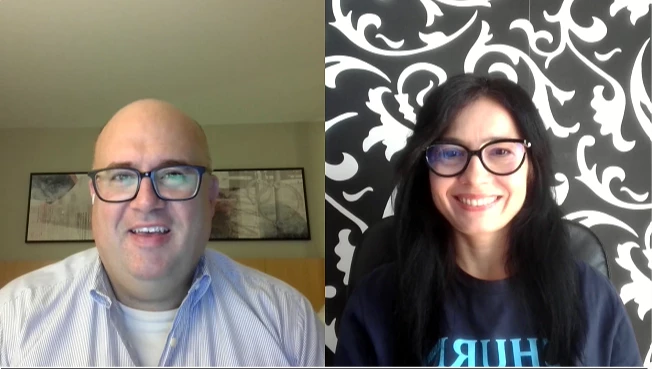
Happy Friday everyone! 😊@Rick Vanover is still collecting airline miles 😉, but we're back with another catch-up and a few stories worth talking about. This time we're looking at VDC + Grafana monitoring, why one company decided Azure wasn't the cheapest answer after all, and how Veeam 13.1 helped protect nearly 48 TiB of Oracle 10g data.Grab a coffee and spend a few minutes with us ! Featured Content via @Greg.L via @Lars Kristoffersen via @TidusandYuna Vanguard Blog SpotlightThis week we are pleased to feature @Othon Oliveira with this post Workload Mobility and Multi-Hypervisor Support with Veeam Data Platform v13.1Special Department Newsvia @brendan.haglund via @Vpaulcb via @HangTen416 and @Chris.Childerhose via @Tomasz.Magda and @Pawel via @Marcel.K via @Madi.Cristil
please dear Veeam support team, can you confirm if it is currently possible to replicate HPE VM Essentials Morpheus environments with Veeam
Is VBR support to backup and restore to Tencent Cloud?
hi,i have downgraded to vbr 13.0.3.63 after trying to upgrade to 13.1.x using vbr vm snapshot. i have vbr console installed on jump server and i am using veeam vsa appliance. after the revert, i have also downloaded console from vbr vsa which i am trying to connect but sign in button is unresponsive,i have found som related logs on remote server related to console and launcher<Util.ClientLauncher.log>[22.07.2026 10:33:32] <01> Info Connection was cancelled.[22.07.2026 10:33:32] <06> Error Cannot access a disposed object.[22.07.2026 10:33:32] <06> Error Object name: 'System.Net.HttpListener'.[22.07.2026 10:33:32] <06> Error (System.ObjectDisposedException)[22.07.2026 10:33:32] <06> Error at System.Net.HttpListener.Stop()[22.07.2026 10:33:32] <06> Error at Veeam.Backup.Identity.Client.LoopbackHttpListener.Dispose()[22.07.2026 10:33:32] <06> Error at Veeam.Backup.Identity.Client.AuthorizationCodeFlowExecutor
Всем привет,Наш файл резервной копии Veeam Agent был частично зашифрован программой-вымогателем. Процесс шифрования был прерван, и затронута только первая часть файла (1 МБ).Подробности: - Файл: dm-1c2 - 192.168.10.x.vbk, ~630 ГБ - Ошибка при монтировании: "Не удалось создать резервную копию источника монтирования. Версия хранилища [...] не поддерживается для доступа только для чтения" — заголовок некорректен. - vbkview завершается с ошибкой "недопустимое максимальное количество банков слота снимка". - Шифрование резервной копии (пароль репозитория) НЕ было включено. - Файл метаданных .vbm полностью цел и доступен для чтения (XML, версия 2626). - Критические идентификаторы: Идентификатор резервной копии = 508d4cc8-d124-4053-b6fb-b4a5190445c6, Идентификатор задания = d0d61837-77e6-4b8b-8319-fc6a449901db, Имя задания = dm-1c2, Тип задания = 12000 (Агент Veeam). - Шестнадцатеричный анализ подтверждает: все данные, начиная со смещения 1 048 576, целы — нули, стандартные индексные структуры
In this demo I have MCP for Fusion, Everpure Fusion fleets, MCP for vCenter, and MCP for Veeam software as the data protection layer. And I'm gonna walk through a simple scenario on how you can tie these three things together to simulate a recovery action. So let's say [I] work on the help desk or somewhere like that, or in the data protection space, and I get a call, and it's from the app team, and they say that this VM, so called test-vm01, data got corrupted. So you'll notice I just asked where the VM is. I didn't say, "Hey, look on this array. Check in Veeam." I just say, "I got a VM." And it's going to go out there, locate where that VM lives, correlate that with the data protection space, and then tell me my options, just as I asked.So it hasn't done anything yet. It's asking me things to check, right? Hey, do you need files? Do you need a database, right? What type of recovery do you need? Is it the whole VM you're gonna roll back, right? Is the VM still on?I am confronted with
other possible Topic-name: When a PostgreSQL Shows Up That Isn't Yours - A field report on a new AAP warning after the upgrade to 13.1 — including the workaround Veeam Support cleared me to publish. The symptomAfter upgrading a customers environment (doesn’t matter if VBR on Windows or VSA) to 13.1, a previously clean job started completing with a warning: a VM backup of (in this example) an Exchange server with Application-Aware Processing (AAP) enabled. Exchange processing itself was fine. The warning referred to a PostgreSQL instance that isn't really in access of the customer: an embedded component of (in this case) Trellix/McAfee Email Security running on the same guest OS.The customer told me: Vendor-managed, no credentials, no supported way to administer it.So Veeam can't authenticate against it — and flags that with a warning. The same job ran clean on the previous version. What changedSupport's original answer was (and i have the confirmation to do this post about it): With
Veeam 13.1 can back up OpenShift Virtualization VMs from the console your team already uses, without an agent in the guest. Here's the architecture in one diagram: five components, two of them new, and the five steps a backup job takes across them. ComponentsVBR Server — the one giving ordersWhat it is: your existing Veeam Backup & Replication machine, physical or virtual. Job description: holds the configuration, schedules jobs, allocates resources, and coordinates every backup and restore. It also doubles as a general-purpose backup proxy, so it can move data to and from repositories on its own. Where it sits in the diagram: top-left, feeding the plug-in. Mental model: the control tower. It decides what and when; it does not read VM disks.Veeam Plug-in for KubeVirt — the translatorWhat it is: the integration layer between VBR and everything OpenShift Virtualization. Job description: lets the backup server connect to an OpenShift Virtualization cluster and run data protection and
Managing user access through Microsoft Entra ID has become a standard requirement in many environments. With Veeam ONE 13.1, it is now possible to integrate SAML-based authentication and use Entra ID or any other SAML IDP as an external Identity Provider. This step-by-step guide shows the process on how to add Entra ID as an IDP in VeeamOne 13.1. First, we need to create an enterprise application in Entra IDNavigate to https://entra.microsoft.com/ --> Enterprise applications and add a new application Select "create your own application" and specify a name, I chose "VeeamOne SAML" Specify SAML as the single-sign on method Now switch to VeeamOne and go to configuration --> access management and add an identity provider In the Identity Provider Settings: Display name: specify some name for your IDPIDP URL: copy the "App Federation Metadata Url"Entity ID: copy the "Microsoft Entra Identifier" In the Veeam ONE Settings, you need to specify a Client ID, for example "VeeamOne"The S
Hello everyone,I updated a VBR console to v13, but after the update, I was unable to connect to the console and received the following message:“Failed to connect to the backup server: Access to the registry key ‘HKEY_LOCAL_MACHINE\SOFTWARE\Veeam\Veeam Backup and Replication\Plugins’ is denied”I noticed that when I launch the console using “Run as administrator,” I can access it without any issues. I checked the Registry Editor, and the permissions are correct.What’s surprising is that I haven’t encountered this error with other customers who have upgraded to v13.I don’t know how to resolve this issue. Do you have any ideas, or have you also experienced this problem?Thanks in advance Bonjour tout le monde,J'ai passé une console VBR en v13, cependant après cette mise à jour je ne parvenais plus à me connecter à la console avec le message suivant:"Failed to connect to the backup server: Access to the registry key 'HKEY_LOCAL_MACHINE\SOFTWARE\Veeam\Veeam Backup and Replication\Plugins' is
There are so many data-breach incidents reported by news media day after day in Japan. Ransomware incidents seem to be increasing as well, although we do not hear about them as often as data-breach incidents. Maybe they have become so common and no longer considered newsworthy.Having said that, there was a new incident just reported on October 7th and it appears to be a special case. The first report was about Ibaraki Prefecture municipal office and municipal police websites closure due to IDCF Cloud service outage. The IDCF Cloud is run by Softbank subsidiary IDC Frontier, which then announced that a part of their system was compromised. Later, more details were announced that IDCF Cloud’s East Japan Region 1 was down due to a ransomware attack, which impacted 495 organizations throughout Japan.According to public information on the IDC Frontier website, IDCF Cloud service’s East Japan Region 1 uses VMware ESXi / vCenter, suggesting the ransomware targeted that specific deployment, th
We remote into the Veeam server to do our choirs, but since we upgraded to 13.1 we have a problem. We can’t use PowerShell 5 since because of the requirements of Veeam. Remoting into the Veeam server using a PowerShell.7 configuration fails with “ParentContainsErrorRecordException: Exception calling "ImportByDll" with "1" argument(s): "Dependency resolution failed for component C:\ProgramFiles\Veeam\Backup and Replication\Console\Veeam.Backup.PowerShell.dll with error code -2147450750. Detailed error:Hostpolicy must be initialized and corehost_main must have been called before callingcorehost_resolve_component_dependencies. “If I do a $psversiontable in the session it says PSVersion=7.6.3What I do:Enter-PSSession -computername veamserver -ConfigurationName “PowerShell.7” -Credential $mycredimport-module Veeam.Backup.PowerShell
During a recent Veeam Agent for Windows deployment project, we found an interesting issue involving VSS, SQL Writer, and old SQL Server references left behind after an incomplete removal or previous intervention.The scenario looked simple at first: a new backup project using VBR, Windows servers, and workstations protected by Veeam Agent. The agent deployment was successful, the jobs were configured, and everything was going according to plan.However, two specific servers started failing during the snapshot stage.At first, it looked like another common VSS issue. But after a deeper investigation, we found that the root cause was related to old SQL Server references pointing to files that no longer existed on the server. The environmentThe environment included: VBR; Veeam Agent for Windows; Windows Server 2025; Servers with SQL-related components; Jobs configured for protection through Veeam Agent. An important detail in this scenario is that the job was not initially configured
This week will take a small break from Wasabi related things and check out replication for Proxmox VE. Check out blog #6 below.Blog - Veeam 13.1 and Proxmox VE – Native Replication is Here Veeam 13.1 and Proxmox VE – Native Replication is Here The post-Broadcom VMware licensing situation has driven a real migration toward alternative hypervisors, and Proxmox VE has been one of the biggest beneficiaries. Veeam has clearly been watching these trends, because version 13.1 delivers something Proxmox users have been waiting for: native VM replication.This is not just a backup story anymore. Proxmox is now a first-class citizen in Veeam’s disaster recovery capabilities. What’s New for Proxmox in 13.1? Veeam already had Proxmox VE support for backup and recovery. Version 13.1 extends this with: Native VM replication — create Proxmox VM replicas for near-instant failover Instant Recovery — spin up VMs directly from backup storage without waiting for a full restore Unified management — ma
Hi guys, Yesterday we attempted to upgrade our VBR server from V12.3.2.4465 to V13.0.2.29 but were met with the below error during the installation process - The upgrade failed and did not allow us to retry at all. Certain options were greyed out - Checking Apps and Features, Veeam reported that it was upgraded but the app was inaccessible. - In the end, we were forced to back out of out upgrade.Has anyone seen this before? ShaunB.
Hi All,I have upgraded VEM and VBR using host Management updater service from 13.0.x to 13.1.x,however after that when I opened vbr console it started upgrade of proxies server but only gives message ' Appliance OS needs upgrade'. I then go to host management of proxies deployed using infra appliance and started upgrade but it updated packages etc ...but vbr still says os need upgrade and proxies go to out of date and unavailable..i then downloaded and attached newer 13.1.x iso ti vm to upgrade and after upgrade to newer rockey linux completed, proxies are back..is there any thing i am doing wrong that updater service not upgrading os and is this iso method is ok for production..
Hello Everyone,I am currently planning a migration of an existing Veeam Backup & Replication v12 (Windows-based) environment to a new Veeam Backup & Replication v13 Software Appliance deployment and would appreciate guidance from anyone who has completed a similar migration.Migration RequirementsThe objective is to migrate the existing environment while maintaining backup and replication operations with minimal disruption. Key requirements include:Migration of existing backup jobs, backup copy jobs, replication jobs, and related configurations.Migration of backup repositories and historical backup data from the existing repositories to the new repository infrastructure.Migration of Veeam Backup & Replication components, configurations, and associated resources.Maintaining replication operations between the Production (DC) and Disaster Recovery (DR) sites throughout and after the migration.Ensuring backup chains, retention policies, and restore capabilities remain intact.Min
Hi,I use communuty edition and wonder how i can acheive my backup goals.I haveOne site with production Hyper-V hostBacked up to a NAS on same site.Backup copy of the first NAS to a second NAS on a second siteAnd a second Hyper-V host on the second site.I cannot figure out how to use my second Hyper-V host and its storage :-If i set up a backup copy job from second nas to second hyperV, the backup do nothing as it has 0 objects to process.-Schedule a replication of my VM from the second NAS to second hyperV? But can i restrict it to only replicate from nas 2? I can select the sources, but its not clear if it will replicate from the selected one.-I tried file backup from nas2 to hyperV 2 storage, but then it seem not much can be done with datas on hyperV2 storage.I dont need HA and in case of disaster can accept the time to rebuild the VM, or loose 1 day of work.Any advices would be appreciated.Merci de m'avoir lu,
Hey Veeam Community,I am having a problem backing up my personal workstation to an external hard drive.I am using the free version of Veeam Agent for Windows.When I backup, my main (C:) Internal SSD shows:Local SSD (C:) (476.1 GB) 262.5 GB read at 142 MB/sHowever, my other Internal SSD ‘terabyte’ (X:)Terabyte (X:) (953.9 GB) 3.8 GB read at 4 MB/s.I benchmarked both of my drives with CrystalDiskMark and they both got good similar results being Sata SSD’s, so the X: drive should not be this slow.I’ve tried swapping sata ports, changing cables, disable throttling when system is in use, etc. Nothing seems to help.Can anyone help me diagnose what is causing one drive to backup so much faster? Thanks, Mike
Every environment has a system that everyone knows is old, but nobody can simply turn off.During a new Veeam Data Platform 13 deployment, I reached one of those systems: an Oracle 10g database running in a Solaris zone. It held almost 48 TiB of data and supported core applications and services used across a worldwide company.The customer knew it needed to be modernized. They also estimated that replacing or migrating the applications and databases around it would cost millions of dollars. That project wasn’t going to happen before we needed a reliable backup.The backup job wouldn’t completeMy initial plan was to protect the Oracle workload as part of the new Veeam deployment. The jobs failed, so I started troubleshooting them like any other failed backup.Eventually, the support requirements gave me the answer. The Veeam Plug-In for Oracle RMAN supports Oracle Database 11g Release 2 and newer; Oracle 10g isn’t listed. Solaris 10 is listed as a supported operating system for the standalo
Hi,My Veeam Agent for Windows backup is stuck at 0% on snapshot creation.When I run vssadmin list providers in PowerShell, no providers are listed. It seems the default Microsoft VSS provider is missing or unregistered.What is the proper procedure to re-register the VSS provider without corrupting existing shadow copies ?Thanks !
Today was release the Veeam Backup & Replication. The process of upgrading or updating a Veeam Software Appliance (VSA) is straightforward and performed via the web interface. One of the advantages of using the VSA is that you do not need to manually manage packages and dependencies within the operating system, as the appliance itself handles the update lifecycle.Despite how easy it is, I will show you here how to perform the upgrade procedure. Navigation and Checking for Updates Access the Host Management Console interface of your Veeam Software Appliance. In the left-hand menu, click the Updates button.This screen will show available updates; you can select the Veeam Backup & Replication option and click the Install Updates Now button. Configuration Check and Details Now we need to check some details and look if it have any compatability issues:Installation Process The wizard will take over and automatically begin downloading and applying the packages. A progress bar displayi
Mindset is key.You can have great slides. You can know your content. You can have the best story in your head. But if your mindset is not right before you step on stage, the audience will feel it.For me, the mindset of a powerful performer starts with one question.How can I serve the audience?That is always where I try to begin. Not with myself. Not with my nerves. Not with what people might think about me. But with the people in the room.What do they need from me?How can I help them?How can I make this useful, memorable, and enjoyable?And yes, let me say it again.Let me entertain you.In a good way.Because presenting is not only about transferring information. It is about presence. It is about commitment. It is about energy. It is about making people feel that the time they spend with you is worth it.That takes mindset.And that takes practice. Great performers make it look easyOne of the things I discovered over the years is that the best performers often look like they do not need to
So here we are. Part 12. The final part of this series.And if you read all the previous parts, you probably noticed something by now.Presenting is not just presenting.It is not just standing in front of a room with a deck.It is not just explaining slides.It is not just knowing your topic.It is not just having a good voice, nice visuals, or a few jokes ready. Presenting is a craft. And if you want to become really good at it, you need to respect that craft.You need to understand the audience.You need to know your story.You need to prepare.You need to use your voice.You need to use your body.You need to work with the room.You need to handle the unexpected.You need to stay yourself.And above all, you need to realize one thing: The stage is not about you. It is about what you can give to the audience. A presenter explains, a performer creates a momentThere is a difference between a presenter and a performer.A presenter can explain information.A performer creates a moment people feel.That d
Already have an account? Login
Enter your E-mail address. We'll send you an e-mail with instructions to reset your password.