
Hey Veeam Community! 👋
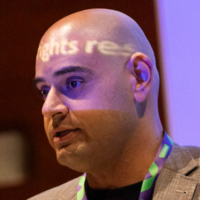
A huge thank you to everyone who tuned into our recent Veeam User Group (VUG) event! It was an absolute blast presenting "Session 1 - Universal CDP and Replication Failover/Failback" alongside our awesome VUG leaders.
We’ve all been in those high-stakes meeting rooms where stakeholders throw around phrases like "We need zero data loss" and "System downtime must be zero." But as IT architects and managers, we know that vague DR commitments don't keep the lights on—hard technology and realistic SLAs do.
or those who couldn't make the live stream (or want to re-watch the step-by-step configuration workflows), the full YouTube recording of the session is here
🔍 Quick Session Recap:
-
RPO vs. RTO in Plain English: Breaking down real-world enterprise examples to translate business expectations into technical realities.
-
The Availability Spectrum: Mapping out exactly when to use snapshot-based backups, async replication, synchronous replication, and where CDP fits to hit those near-zero metrics.
-
Under the Hood of Universal CDP: We went deep into the architecture, explaining how the I/O Filter driver intercepts writes and how the Veeam CDP Daemon splits data into transaction logs (
tlog) for short-term and delta disks for long-term restore points. -
I/O Filter driver: We went deep into the what is I/O and the functionality for the I/O capture and logging vs the snapshot based and VSS consistency.
-
The Crucial "Keep in Mind": Why user action is mandatory after a failover (Undo, Permanent Failover, or Failback) to avoid replica crashes and datastore capacity issues.
https://helpcenter.veeam.com/docs/vbr/userguide/uni_cdp_considerations.html?ver=13-
Linux Universal CDP: Ensure that when you have a UEFI, or EFI with Secure Boot enabled. to install the Linux MoK for Veeam Certificate. also ens
-
WAN Links: it is not bound by RTT or Latency, yet impacted. the crucial is that the BW is not less than 100 mbps
-
Failback: is towards VMware in Main Site, rather than the physical system
-
-
What's New & What's Next: We explored the latest support for Linux workloads, Application-Aware processing, Re-IP rules, and what's currently under discussion for life post-v13 (like cloud targets and failing back to original locations).
💡 Key Takeaway: As we discussed in the session, CDP is not just a cool technical feature, there is actual business cases for migration purposes, and how P2V journeys are repeating again with the Hybrid Cloud motion from Native VMs to VMware.
👉 I’ll Write up a step-by-step architectural breakdown of the session later,
I want to pass the mic back to the community: For those who watched, what was your biggest takeaway regarding the post-failover finalization steps? If you're planning a CDP deployment, what's your biggest architectural hurdle today?