


Over the last decade, ransomware attacks have changed dramatically. What once was a simple malware encrypting user files has evolved into a business-driven cybercrime model. Today, attackers think strategically, move laterally, and aim directly at what truly hurts an organization: its ability to recover.
To understand how to defend modern environments, we must first understand hacker thinking. This means looking at attacks from the attacker’s perspective — how they enter, how they move, and how they decide when an attack is successful.
More importantly, it means understanding why backup infrastructure has become a primary target, not an afterthought.
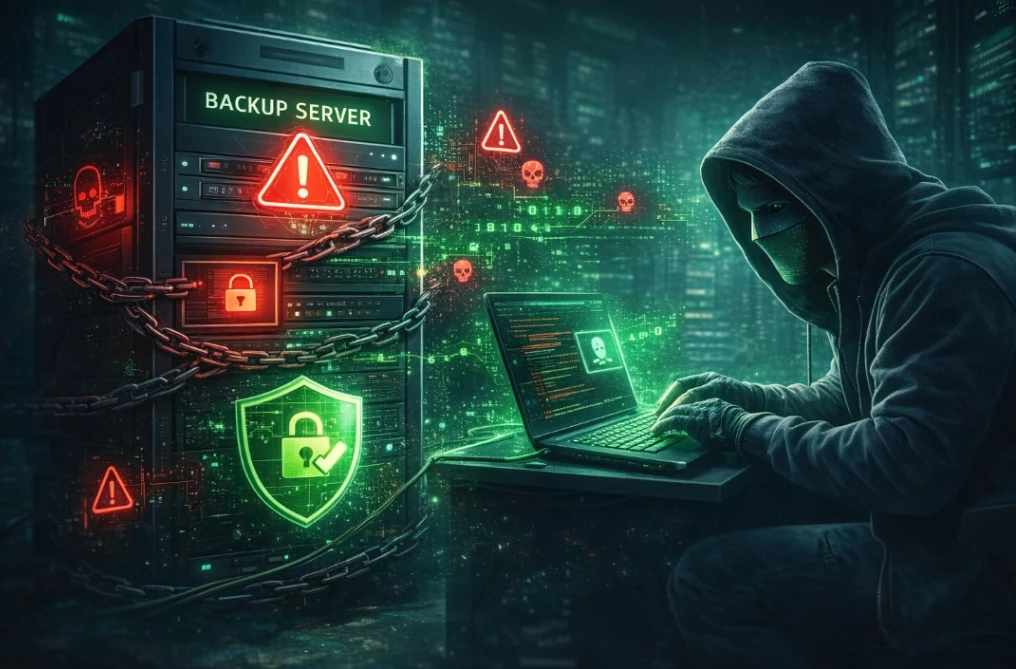
How Hacker Thinking Has Evolved Over Time
In the early days, ransomware attacks were opportunistic. Attackers relied on phishing emails, weak passwords, and unpatched systems. Once inside, they encrypted whatever they could access and waited for payment.
However, modern hacker thinking is very different.
Today’s attackers are patient. They do not rush. Instead, they quietly explore the environment, often remaining undetected for weeks. Their goal is no longer just encryption — it is total operational paralysis.
Because of that, backup systems are now attacked before ransomware is deployed.
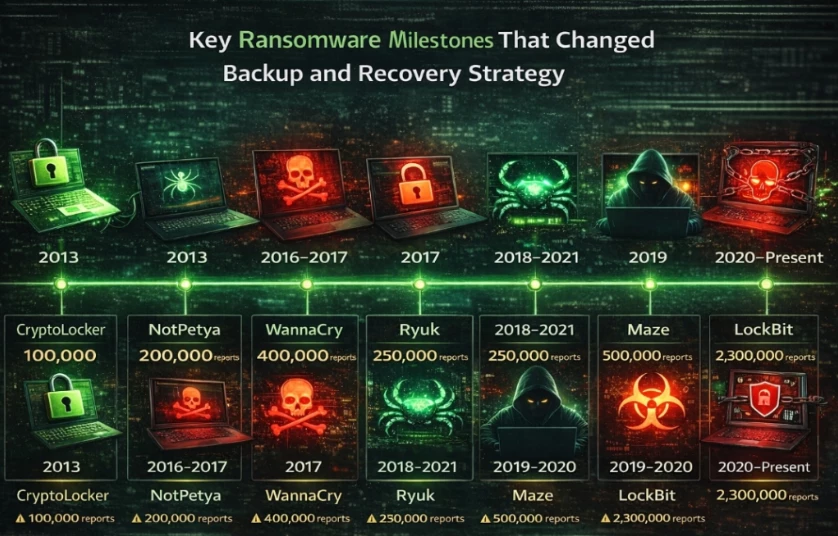
How Famous Ransomware Families Operate — and What Backup Strategy Stops Them
Understanding hacker thinking becomes much clearer when we look at how ransomware evolved over time. Each major ransomware family didn’t just introduce new malware techniques — it exposed very specific weaknesses in how organizations designed, protected, and trusted their backup environments.
Below, the ransomware families are presented in the exact chronological order of the timeline, showing how attackers adapted — and how backup strategies were forced to evolve in response.
CryptoLocker
CryptoLocker was one of the first ransomware campaigns to gain global attention. It spread mainly through phishing emails containing malicious attachments. Once executed, it immediately encrypted user files using strong cryptography.
At that time, most companies relied on simple backups stored on network shares or mapped drives. Because those backups were online and writable, CryptoLocker frequently encrypted production data and backups at the same time.
This wave made one thing very clear: a backup that is always online and fully accessible is not a safe backup. It was the first large-scale lesson in basic backup separation and access control — even before immutability became part of the discussion.
NotPetya
NotPetya initially appeared as ransomware, but it quickly became clear that its goal was destruction, not recovery. It spread using trusted software update mechanisms and aggressively harvested credentials to move laterally across networks.
Even organizations willing to pay the ransom were unable to recover data. In many cases, backups were either wiped, corrupted, or simply never tested for real recovery scenarios.
NotPetya exposed a dangerous assumption still common today: having backups does not guarantee recoverability. This attack reinforced the importance of isolated copies and regular recovery validation.
WannaCry
WannaCry marked a turning point in ransomware history. By exploiting the EternalBlue vulnerability in unpatched Windows systems, it spread automatically and extremely fast — without user interaction.
Many organizations had no time to respond. Systems were encrypted within minutes, and backups connected to compromised hosts were often lost as well.
WannaCry reinforced two fundamental principles that still apply today: patching is not optional, and backups must not depend solely on online, writable infrastructure.
Ryuk
Ryuk represented a major evolution in attacker behavior. Instead of spreading automatically, attackers spent days — sometimes weeks — inside the environment. They mapped Active Directory, escalated privileges, and deliberately targeted backup servers before launching encryption.
Backup services were stopped, repositories were deleted, and recovery options were intentionally removed.
This was one of the first ransomware families to systematically and intentionally attack backup infrastructure. It showed that backups are no longer collateral damage — they are a primary target.
Hardened repositories, immutability, strict credential separation, and monitoring unusual backup behavior could dramatically reduce Ryuk’s impact.
Maze
Maze changed the ransomware landscape by introducing double extortion. Attackers not only encrypted data but also exfiltrated sensitive information and threatened public disclosure.
Even organizations with solid backups faced pressure to pay — not because they couldn’t recover systems, but because of legal, regulatory, and reputational risks.
Maze made it clear that backups are essential for operational recovery, but data resilience must also consider data theft, not just data encryption.
LockBit 3.0
LockBit represents the modern ransomware-as-a-service model. It is fast, automated, and highly focused on eliminating recovery paths as early as possible.
Once inside an environment, LockBit actively searches for backup software, attempts to stop services, delete restore points, and compromise storage targets. In recent versions (LockBit 3.0), these actions are highly optimized and executed very early in the attack chain.
Organizations using immutable object storage, air-gapped copies, hardened repositories, and anomaly detection are significantly more resilient against this type of attack.
What This Timeline Clearly Shows
Across more than a decade of ransomware evolution, one pattern remains consistent: attackers don’t win because encryption is unbeatable — they win when recovery fails.
Each ransomware generation improved its ability to remove, corrupt, or neutralize backups. This is why modern ransomware defense is no longer just about prevention. It is about survivability, recoverability, and data resilience.
A well-designed backup strategy — following principles like separation, immutability, air-gap, monitoring, and validation — is often the final and most critical layer of defense when everything else has already failed.
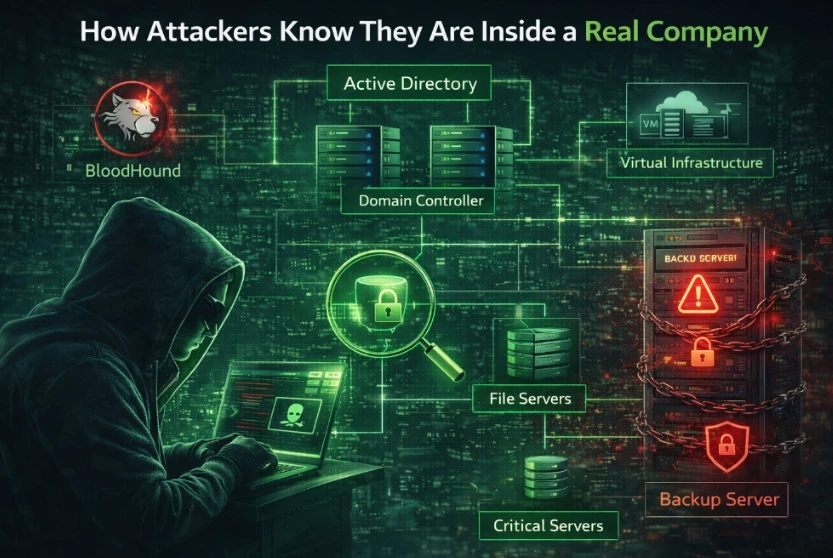
How Attackers Know They Are Inside a Real Company
Once initial access is achieved, attackers need context. They must understand where they are and what they control.
At this stage, hacker thinking relies heavily on Active Directory reconnaissance. Tools such as BloodHound, AdFind, and native Windows commands are commonly used to map trust relationships, privileged accounts, and critical servers.
Through this process, attackers identify:
- Domain controllers
- File servers
- Virtualization platforms
- And most importantly: backup servers and repositories.
Backup servers are easy to recognize. Hostnames, installed services, open ports, and service accounts quickly reveal their purpose. At this point, the attacker knows the environment is worth monetizing.
Why Backup Infrastructure Is a Priority Target
From an attacker’s perspective, encryption alone is not enough. If a company can restore data quickly, the attack fails.
This is where hacker thinking becomes very clear.
Attackers actively try to:
- Disable backup services
- Delete restore points
- Encrypt backup repositories
- Steal credentials used by backup software
If backups are destroyed or corrupted, the attacker gains leverage. Negotiation power increases dramatically when recovery is no longer possible.
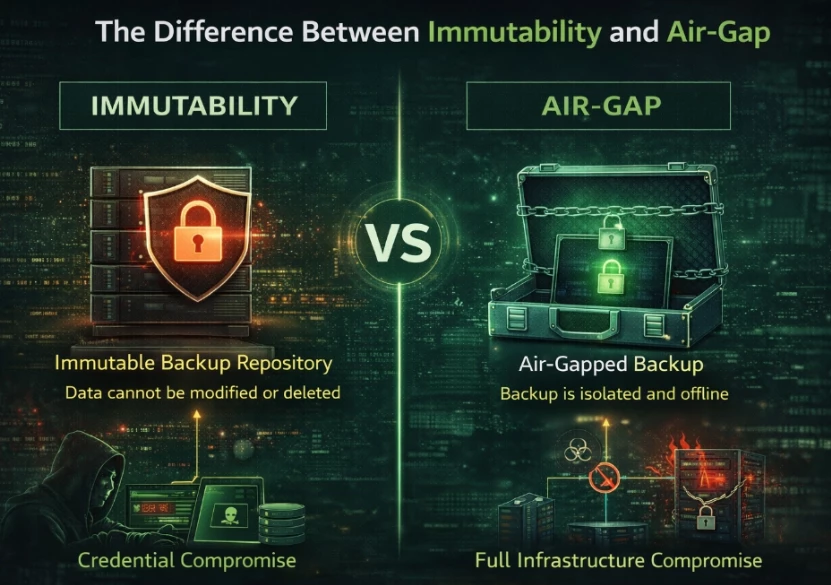
The Difference Between Immutability and Air-Gap
At this stage, many organizations misunderstand protection concepts.
Immutability means backup data cannot be modified or deleted for a defined period, even by administrators.
Air-gap, on the other hand, means backups are physically or logically isolated from the production environment.
They serve different purposes.
Immutability protects against credential compromise and malicious deletion.
Air-gap protects against full infrastructure compromise.
A resilient strategy uses both, not one or the other.
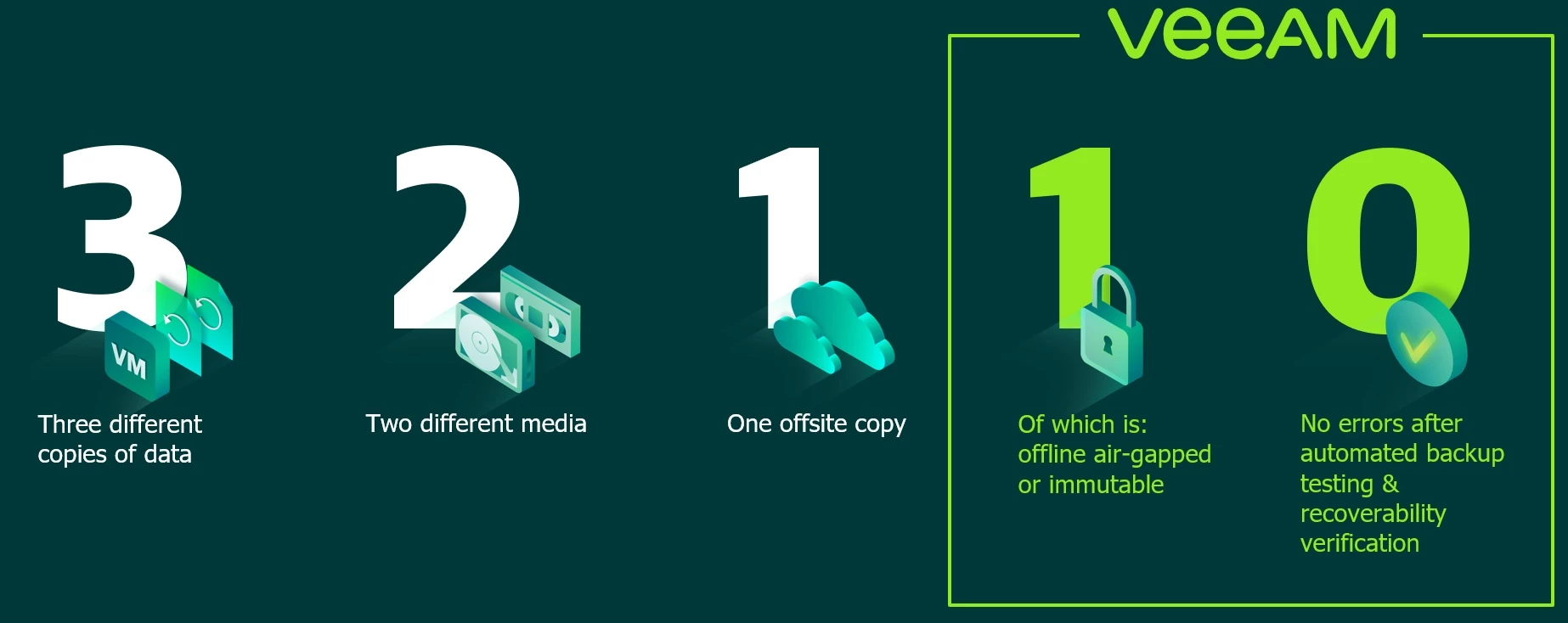
The 3-2-1-1-0 Rule as a Survival Framework
Security is not just about software. It is about principles.
The Veeam 3-2-1-1-0 rule exists because hacker thinking evolved:
- 3 copies of data
- 2 different media
- 1 copy offsite
- 1 immutable or air-gapped copy
- 0 errors after verification
This framework ensures that even if attackers reach administrative access, recovery remains possible.
Backup Is No Longer Passive
A common misconception is that backups only matter after an attack.
Modern backup platforms are active security participants.
Tools like Veeam ONE and the Veeam Threat Center can identify early warning signs such as:
- Abnormal data change rates
- Unexpected encryption patterns
- Sudden spikes in CPU or I/O
- Unusual job failures
These indicators often appear before ransomware finishes its job.
In other words, backup systems can help detect attacks while they are still happening.
The Human Factor and Insider Threats
Not all attacks come from outside.
Stolen credentials, compromised admins, or malicious insiders pose real risks. That is why features like:
- Linux Hardened Repository
- Four-Eyes Approval
- Role-based access control are critical.
They limit blast radius and ensure that no single compromised account can destroy recovery capability.
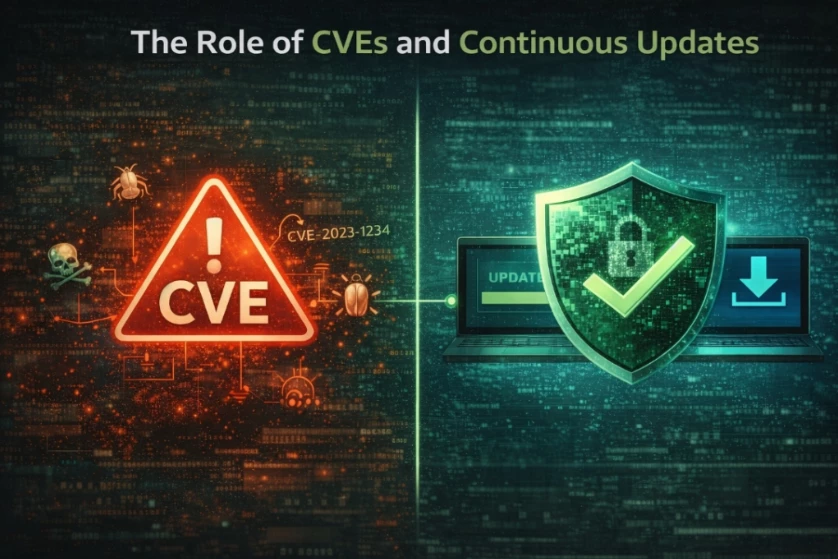
The Role of CVEs and Continuous Updates
Many successful ransomware campaigns rely on known vulnerabilities.
Unpatched systems, outdated software, and ignored CVEs provide attackers with easy entry points. This is why keeping backup infrastructure updated is not optional.
Veeam continuously releases security patches and improvements, often responding quickly to newly disclosed vulnerabilities. Staying current is one of the simplest and most effective defensive actions.
Why Backup Professionals Are the Last Line of Defense
When everything fails — firewalls, endpoints, identity controls — recovery is what determines survival.
That is why backup professionals operate at the last layer of problem resolution. This role demands technical depth, architectural thinking, and constant learning.
Data resilience is not a feature. It is a mindset.
Final Thoughts
Understanding hacker thinking in modern ransomware attacks changes how we design environments. It shifts the focus from prevention alone to survivability.
Backup is no longer a safety net.
It is the foundation of cyber resilience.
And when properly designed, it ensures that even successful attacks do not become business-ending events.