



Yesterday, I published an article on #CloudCity about my FinOps journey.
Check here: FinOps in Practice: Optimizing Cloud Value with AWS, CloudCheckr, and Veeam
I'd like to highlight some key initiatives that helped my team strengthen data protection while improving cost control and reducing expenses associated with backup infrastructure assets.
- Resilience, Backup & High Availability - by CLOUDCHECKR
CloudCheckr identifies risks related to data protection and business continuity, ensuring workloads are prepared for failures, accidental deletions, and downtime.
Examples of recommendations:
• EBS volumes without snapshots (direct data loss risk)
• EBS volumes without recent snapshots (outdated backup)
• EC2 instances without termination protection enabled
• Environments without multi-AZ deployment
• Lack of automated backup and retention strategy
• Critical resources without defined recovery (DR) policies
• Low maturity in business continuity (BCP)
• Workloads not prepared for availability zone failures
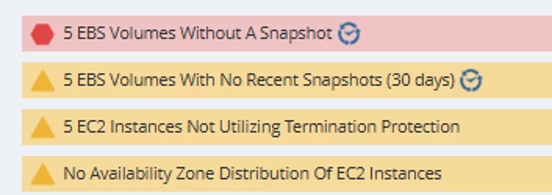
- How the FinOps area helps the Backup Engineer - by CLOUDCHECKR
In the previous example, we found:
• EBS volumes without snapshots (direct data loss risk)
• EBS volumes without recent snapshots (outdated backup)
• Insufficient backup retention policies (e.g., retention under 30 days)
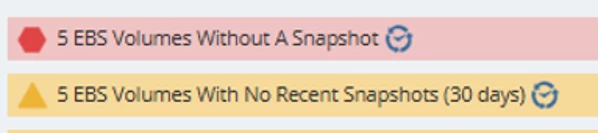
The area directly contributes to validating backup compliance by ensuring not only that backups are enabled, but that they follow proper retention, execution, and consistency policies across services.
Here, CloudCheckr validates that RDS automatic backups are properly configured. In other words, this specific risk is already covered in the environment.

It validates whether there were failures in the last EMR/HBase cluster backup and in this case, it is healthy, meaning no execution failures were identified.

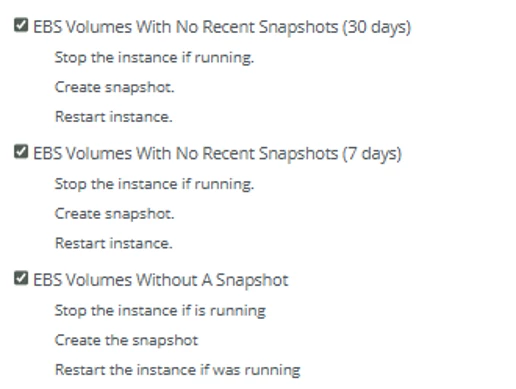
Additionally, CloudCheckr not only identifies protection gaps but also guides corrective actions in a practical way, such as creating snapshots for volumes without recent or existing backups. In some cases, recommendations include safe operational steps like stopping the instance, creating the snapshot, and restarting the environment, ensuring data consistency and supporting compliance and best practices.
- Backup Cost Visibility - by Veeam for AWS
Veeam Backup for AWS allows estimating the cost of the backup strategy clearly and in advance, providing financial predictability before implementation.
Examples of benefits:
• Detailed cost estimation per configured backup policy
• Cost visibility by component (snapshots, replicas, traffic, transactions)
• Calculation based on frequency and retention defined in scheduling
• Identification of financial impact before production deployment
• Support for decision-making between different protection strategies
• Greater control over AWS backup operational costs
• Reduced surprises in the monthly bill
(Exclusive video about Veeam for AWS)
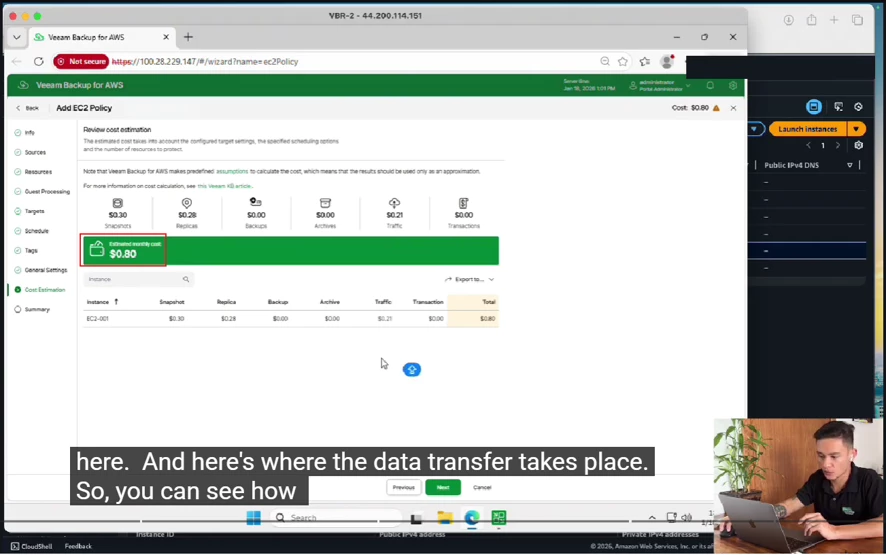
Snapshots: $0.30
Replicas: $0.28
Traffic: $0.21
Estimated total: $0.80/month
Available here:
In an upcoming post, I will dedicate a deeper dive specifically to this topic: FinOps applied to Data Protection.
Has anyone here dealt with similar challenges or initiatives?
I'd love to hear your experiences and suggestions on topics I could explore in a future post.
Looking forward to the discussion.
Best regards, my friends.