


Veeam Oxford Style Debate #4

Veeam Oxford Style Debate – Episode 4 -Who Should Detect Malware?

  • Oct 5, 2026 10:07 AM UTC
  • 30 comments
  • 420 views
Show first post

30 comments

Scott
Forum|alt.badge.img+10
  • Veeam Legend
  • Nov 18, 2026 5:51 PM UTC

AGAINST. 

I have had Veeam Malware detection discover dormant files (last access around 2008) in backups where the files had their name changed, were encrypted, and marked as hidden / system.


Files like this won’t show, but when someone does a RoboCopy on a file share during a migration or mounts a disk to a server, Veeam detects malware. Technically it’s correct. No other tools seemed to notice when this issue was happening.  Defender didn’t care either, even with full scans etc.


I am not a fan of alert fatigue, or getting my email spammed, however, being able to have a backup admin notify security, who may have missed something is an amazing feature. This also will allow us to find the last clean backup in our environment if we ever need to restore. 


Iams3le
Forum|alt.badge.img+15
  • Nov 23, 2026 2:57 PM UTC

Many customers are telling me that they disabled it to not cause issues. Another reason is that they don’t trust that “tool” at all and have a “mature” EDV / AV / FW solution. Although I get the point, why not have that additional layer of security, even if that means only catching 5-10%? Why not take this with them and use it in addition to what’s already there (“mature tools”)?

Cheers!

Lukas

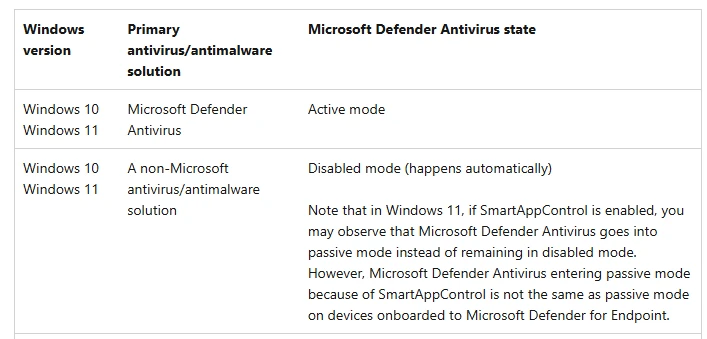
Thanks Lukas for your vital point. Before adding my points, I was reading through the comments so I do not repeat what someone has said. I know this is from a customer and should in case someone else has this disabled. I personally do not recommend disabling Microsoft Defender entirely. Having a mature 3rd endpoint protection solution doesn't automatically mean that the built-in Windows security capabilities should be completely disabled. Microsoft Defender can coexist with third-party security solutions in a passive mode. This allows organisations to benefit from additional Microsoft Defender for Endpoint capabilities which can help detect and remediate threats that might have bypassed the primary antivirus solution.


Ref(s):


For the table discussing Windows Server, I will recommend checking the links referenced above.


Iams3le
Forum|alt.badge.img+15
  • Nov 23, 2026 7:19 PM UTC

Bringing the argument forward once again

  • Using Veeam for malware detection (Inline Entropy and YARA scanning) is a distraction from dedicated EDR tools.
  • Another big aspect missed by some of us "Who Should Detect Malware?". Thankfully, ​@Viperian addressed this due to unclear ownership and poor purchasing decisions, ​@Dynamic addressed this in his comment where he emphaized it could become a distraction if nobody owns the alerts, and and ​@matheusgiovanini argued who "investigates the alerts? … who approves the recovery point? Without a defined workflow, concerns about alert fatigue and operational overhead are valid."

Drawing on these points, organizations must establish clear ownership and accountability for how malware alerts are triaged and acted upon. As ​@kciolek, rightly noted, a backup engineer’s responsibility goes beyond simply ensuring green backup jobs,  and that they must help ensure organizations can recover safely after an attack. Defining this workflow and assigning clear ownership can help prevent friction between IT and security teams.


Against: 
 

I disagree that using Veeam for malware detection is a distraction from dedicated EDR solutions.

It is important to note that Veeam’s strategic vision has evolved from simple backup and recovery into comprehensive Data Resilience and proactive cyber defense. By integrating capabilities such as Inline Entropy Analysis, Threat Center/Recon, YARA scanning and Veeam Threat Hunter into its data protection platform, Veeam extends threat detection and security visibility into the backup environment, turning backup from a passive recovery mechanism into an additional layer of threat detection and recovery assurance.

At this stage, we will have to distinguish between detecting threats in production and identifying potentially compromised data within backup repositories. EDR and Veeam's Inline Entropy Analysis and YARA scanning provide different layers of visibility. 

To add to the point above as discussed here “Data protection has evolved significantly in recent years. Discussions have shifted from inline vs. post-process deduplication to security focused topics such as workload immutability, incident response, and malware detection. Backups scanning for malware was and never is meant to replace traditional endpoint or extended detection and response tools. It is meant to provide an additional layer of detection for a defense-in-depth approach for detecting malware.”

Therefore, my position is that Veeam for malware detection is  not a distraction from dedicated EDR solutions. I do not see these technologies as competing solutions. I see them as complementary capabilities that should work together.

Therefore, having overlapping security capabilities is not necessarily a distraction. Poorly defined responsibilities and a misunderstanding of what each technology actually delivers are the real problems.
 

Who Should Detect Malware?
Ultimately, I believe this comes down to proper security architecture, governance and segregation of duties. Larger organisations may have dedicated teams responsible for EDR, infrastructure security, backup and incident response. Smaller organisations may not have that luxury, meaning responsibilities often overlap and everyone must contribute to the overall security posture. Also, the usecase raised by ​@tm67 for MSP fits into this explaination correctly.

In an organisation with clearly defined responsibilities, malware detection may primarily sit with a dedicated security team or SOC, while infrastructure or backup teams ensure flawless backup and recovery. However, not every organisation has this level of separation. In some environments, system administrators, infrastructure engineers and security teams share responsibilities for maintaining and protecting the IT environment. We all have been involved in similar roles (firefighting) and in this case, everyone needs to contribute to the organisation's overall security posture.


To answer the questions from Edwin below: 

> If your CIO or procurement team asks, “Why are we paying twice for malware detection?”, how do you explain the distinction in one sentence?

EDR focuses on detecting and responding to threats in the live environment, while Veeam provides additional visibility into backup data and helps establish whether recovery points are safe to restore.

For example, if we were attacked, do we have clean data to recover from? An organization that chooses one over the other has misunderstood both technologies. The real value comes from using them together, not treating them as competing products.

I will further share this link with them to read 😄: https://www.veeam.com/blog/veeam-s-comprehensive-malware-detection-before-during-and-after-a-backup.html

> Would you ever accept reduced EDR coverage because Veeam Threat Hunter, YARA scanning and inline entropy analysis are enabled?

Absolutely not. I would not consider Veeam a replacement for EDR, nor would I recommend reducing EDR coverage because backup scanning is enabled. They serve different purposes. In fact, having multiple layers of detection is precisely what defence in depth is about.

We should not create a security gap simply because another product offers some overlapping functionality. What if the EDR misses a malware in production (live environemnt) and then make it into the backup chain undetected, the organization can end up “recovering” straight back into an infected state?

> If the answer is no, are we doing enough to position Veeam as recovery assurance rather than as an alternative security detection platform?

I think this is where organisations need to improve their understanding of Veeam's broader strategic direction. Its evolution from traditional backup and recovery towards comprehensive data resilience and proactive cyber defence demonstrates that its role is no longer limited to backup and recovery alone thereby, complementing security capability that strengthens an organisation's overall defence-in-depth strategy, without replacing dedicated EDR solutions.

By integrating capabilities such as Inline Entropy Analysis, Veeam Threat Hunter, YARA scanning and Threat Center, Veeam extends threat detection and security intelligence into the backup environment. In effect, it turns backup from a passive  backup and recovery mechanism into an additional layer of security visibility and threat detection.

We should do more to communicate how its integrated threat detection capabilities contribute to recovery assurance, helping organisations identify potentially compromised backups and make more informed recovery decisions.


lucasmagnum
Forum|alt.badge.img+2
  • Experienced User
  • Nov 23, 2026 7:47 PM UTC

Bringing the argument forward once again

  • Using Veeam for malware detection (Inline Entropy and YARA scanning) is a distraction from dedicated EDR tools.
  • Another big aspect missed by some of us "Who Should Detect Malware?". Thankfully, ​@Viperian addressed this due to unclear ownership and poor purchasing decisions, ​@Dynamic addressed this in his comment where he emphaized it could become a distraction if nobody owns the alerts, and and ​@matheusgiovanini argued who "investigates the alerts? … who approves the recovery point? Without a defined workflow, concerns about alert fatigue and operational overhead are valid."

Drawing on these points, organizations must establish clear ownership and accountability for how malware alerts are triaged and acted upon. As ​@kciolek, rightly noted, a backup engineer’s responsibility goes beyond simply ensuring green backup jobs,  and that they must help ensure organizations can recover safely after an attack. Defining this workflow and assigning clear ownership can help prevent friction between IT and security teams.


Against: 
 

I disagree that using Veeam for malware detection is a distraction from dedicated EDR solutions.

It is important to note that Veeam’s strategic vision has evolved from simple backup and recovery into comprehensive Data Resilience and proactive cyber defense. By integrating capabilities such as Inline Entropy Analysis, Threat Center/Recon, YARA scanning and Veeam Threat Hunter into its data protection platform, Veeam extends threat detection and security visibility into the backup environment, turning backup from a passive recovery mechanism into an additional layer of threat detection and recovery assurance.

At this stage, we will have to distinguish between detecting threats in production and identifying potentially compromised data within backup repositories. EDR and Veeam's Inline Entropy Analysis and YARA scanning provide different layers of visibility. 

To add to the point above as discussed here “Data protection has evolved significantly in recent years. Discussions have shifted from inline vs. post-process deduplication to security focused topics such as workload immutability, incident response, and malware detection. Backups scanning for malware was and never is meant to replace traditional endpoint or extended detection and response tools. It is meant to provide an additional layer of detection for a defense-in-depth approach for detecting malware.”

Therefore, my position is that Veeam for malware detection is  not a distraction from dedicated EDR solutions. I do not see these technologies as competing solutions. I see them as complementary capabilities that should work together.

Therefore, having overlapping security capabilities is not necessarily a distraction. Poorly defined responsibilities and a misunderstanding of what each technology actually delivers are the real problems.
 

Who Should Detect Malware?
Ultimately, I believe this comes down to proper security architecture, governance and segregation of duties. Larger organisations may have dedicated teams responsible for EDR, infrastructure security, backup and incident response. Smaller organisations may not have that luxury, meaning responsibilities often overlap and everyone must contribute to the overall security posture. Also, the usecase raised by ​@tm67 for MSP fits into this explaination correctly.

In an organisation with clearly defined responsibilities, malware detection may primarily sit with a dedicated security team or SOC, while infrastructure or backup teams ensure flawless backup and recovery. However, not every organisation has this level of separation. In some environments, system administrators, infrastructure engineers and security teams share responsibilities for maintaining and protecting the IT environment. We all have been involved in similar roles (firefighting) and in this case, everyone needs to contribute to the organisation's overall security posture.


To answer the questions from Edwin below: 

> If your CIO or procurement team asks, “Why are we paying twice for malware detection?”, how do you explain the distinction in one sentence?

EDR focuses on detecting and responding to threats in the live environment, while Veeam provides additional visibility into backup data and helps establish whether recovery points are safe to restore.

I will further share this link with them to read 😄: https://www.veeam.com/blog/veeam-s-comprehensive-malware-detection-before-during-and-after-a-backup.html

> Would you ever accept reduced EDR coverage because Veeam Threat Hunter, YARA scanning and inline entropy analysis are enabled?

Absolutely not. I would not consider Veeam a replacement for EDR, nor would I recommend reducing EDR coverage because backup scanning is enabled. They serve different purposes. In fact, having multiple layers of detection is precisely what defence in depth is about.

We should not create a security gap simply because another product offers some overlapping functionality. What if the EDR misses a malware in production (live environemnt) and then make it into the backup chain undetected, the organization can end up “recovering” straight back into an infected state?

> If the answer is no, are we doing enough to position Veeam as recovery assurance rather than as an alternative security detection platform?

I think this is where organisations need to improve their understanding of Veeam's broader strategic direction. Its evolution from traditional backup and recovery towards comprehensive data resilience and proactive cyber defence demonstrates that its role is no longer limited to backup and recovery alone thereby, complementing security capability that strengthens an organisation's overall defence-in-depth strategy, without replacing dedicated EDR solutions.

By integrating capabilities such as Inline Entropy Analysis, Veeam Threat Hunter, YARA scanning and Threat Center, Veeam extends threat detection and security intelligence into the backup environment. In effect, it turns backup from a passive  backup and recovery mechanism into an additional layer of security visibility and threat detection.

We should do more to communicate how its integrated threat detection capabilities contribute to recovery assurance, helping organisations identify potentially compromised backups and make more informed recovery decisions.


Very good ​@Iams3le !!! 

matheusgiovanini
Forum|alt.badge.img+12

Bringing the argument forward once again

  • Using Veeam for malware detection (Inline Entropy and YARA scanning) is a distraction from dedicated EDR tools.
  • Another big aspect missed by some of us "Who Should Detect Malware?". Thankfully, ​@Viperian addressed this due to unclear ownership and poor purchasing decisions, ​@Dynamic addressed this in his comment where he emphaized it could become a distraction if nobody owns the alerts, and and ​@matheusgiovanini argued who "investigates the alerts? … who approves the recovery point? Without a defined workflow, concerns about alert fatigue and operational overhead are valid."


Thanks C, I appreciate you bringing my point into the discussion.

I think this is where the distinction between detecting a threat and making a recovery decision becomes particularly important. Detection is only one part of the process. During an incident, someone still needs to investigate the findings, correlate them with other available information, assess the risk and determine which recovery point can be trusted.

That is why I see Veeam's malware detection capabilities as valuable beyond simply identifying suspicious files. They can contribute to the decision-making process and help reduce uncertainty when recovery is required.

Ultimately, technology alone does not define an effective security strategy. The processes, responsibilities and decisions behind it are just as important.