


I recently shared a CloudFormation template that deploys a complete Veeam Data Platform infrastructure on AWS using Infrastructure as Code (IaC). The goal is to provide a secure, repeatable, and fully automated deployment experience, leveraging private networking, AWS Systems Manager, and native AWS services.
📄 You can find the full post and project details here:
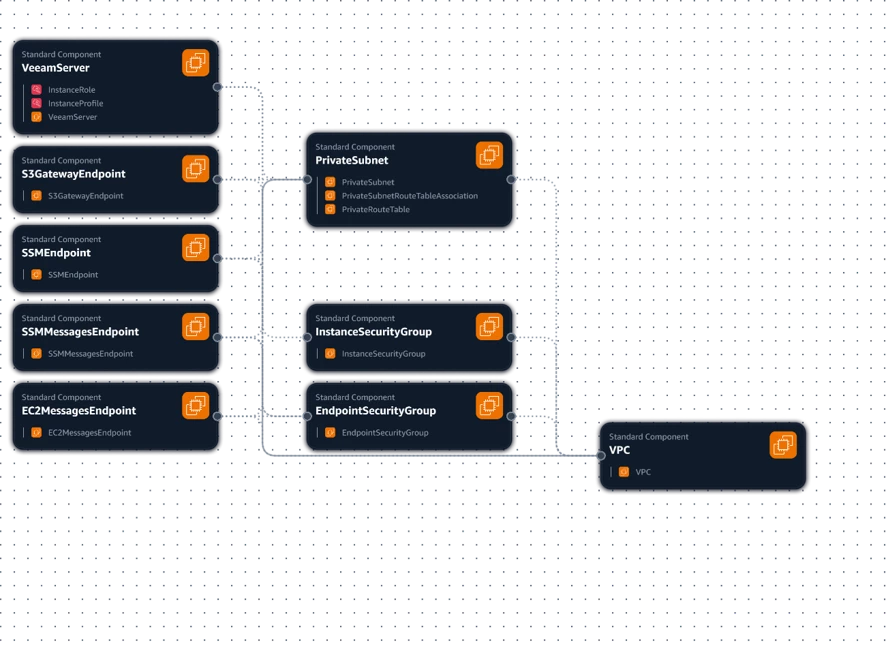
Since publishing Version 1, I've already started working on Version 2, and I'd like to share an early preview of where the project is heading.
The focus of V2 is to evolve the solution from a proof of concept into a more enterprise-ready foundation by introducing customer-managed KMS encryption, additional private AWS service endpoints, more granular security group controls based on least-privilege principles, and improved support for future scalability and multi-account environments.
🔍 Here's an early look at the V2 architecture and the enhancements currently under development:
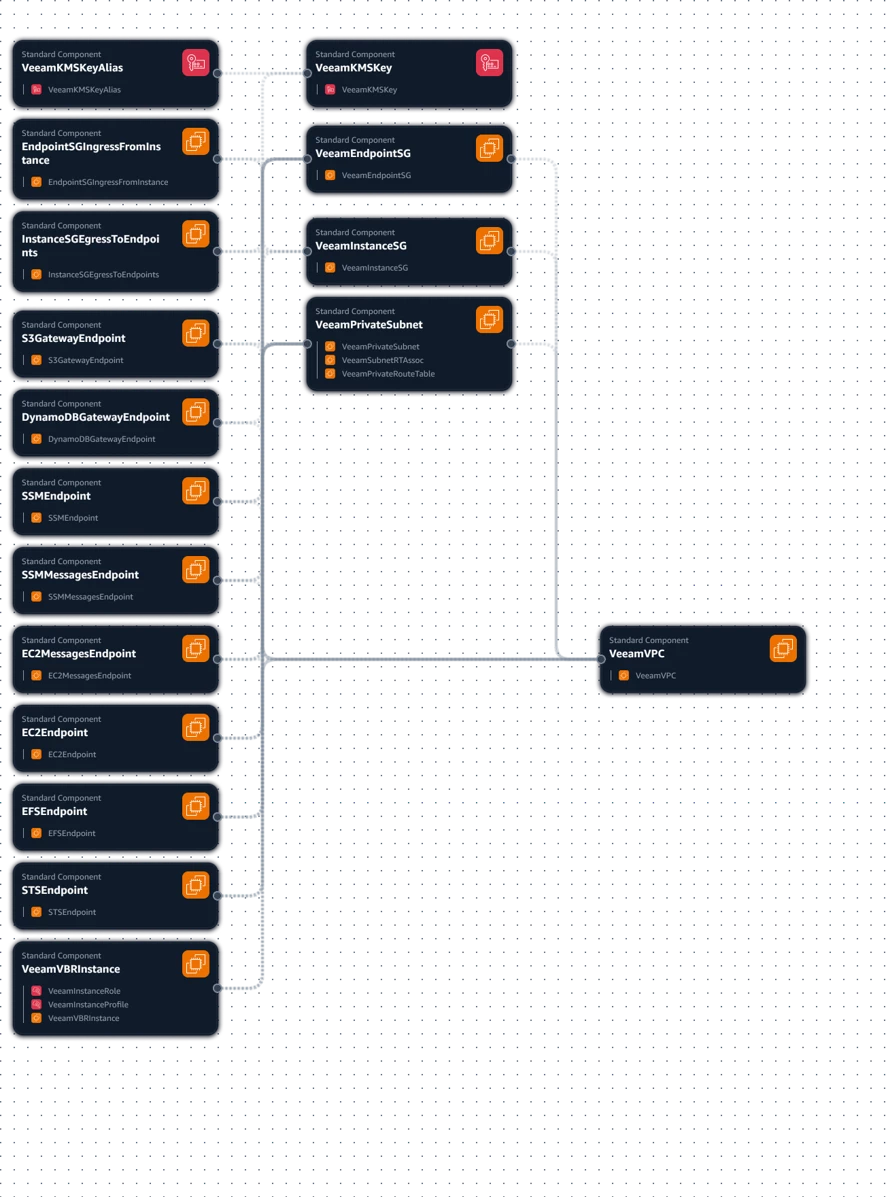
Some of the planned enhancements include:
✅ Customer-managed AWS KMS encryption keys
✅ Granular security group rules following least-privilege principles
✅ Additional VPC Endpoints (EC2, STS, DynamoDB, and EFS)
✅ Improved resource naming and template organization
✅ Enhanced support for future multi-account and enterprise deployments
Here’s the GitHub repository 🚀
Feel free to explore, test, and share your feedback. If you run into any issues, have suggestions, or spot opportunities for improvement, please let me know. Your contributions are more than welcome!
📍 https://github.com/jeanSczepanski/Wizaard
Disclaimer
⚠️ Community Project Disclaimer
This CloudFormation template was created primarily for learning, testing, and community collaboration purposes and is currently in Version 1.
While the solution demonstrates a secure-by-design approach for deploying Veeam Data Platform on AWS, it should be considered a proof of concept (PoC) and not a production-ready reference architecture.
Before being adopted in production environments, several areas still require further development, validation, and hardening, including but not limited to:
- High availability and resilience design
- Backup repository scalability
- Enterprise security controls and compliance requirements
- Monitoring and observability
- Automated patching and lifecycle management
- Disaster recovery validation
- Cost optimization
- Multi-account and multi-region architectures